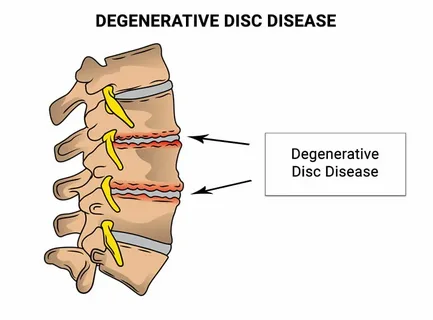
Degenerative Disc Disease (DDD) belongs to a list of associated conditions that result in back pain, which is one of the most frequent medical issues throughout the world. When the condition involves more than one disc in the spinal column, then it is known as Multilevel Degenerative Disc Disease– a more complicated and frequently symptomatic variant of the condition
As a new patient or someone who is just interested in knowing more about multilevel degenerative disc disease, this guide is for you as it discusses everything you should know about multilevel degenerative disc disease,e including the conditions that cause it, how it is manifested, treatment, and lifestyle modification.
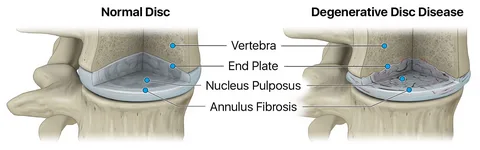
Table of Contents
What is the Multilevel Degenerative Disc Disease?
Degenerative Disc Disease is a pathology in which the intervertebral discs come to disintegrate due and aging, wear and tear, or injury. These disks have a very important role to play in cushioning the spine and in absorbing shocks.
When more than two (usually) spinal levels are involved (i.e., when more than two discs become degenerated), the disorder goes by the name multilevel degenerative disc disease or simply multilevel disc degeneration. It may take place at the neck (cervical spine), mid-back (thoracic spine), or lower back (lumbar spine); however, the lumbar and cervical regions are affected more often.
Reasons for Multilevel Degenerative Disc Disease
Aging is the major cause of disc degeneration; whereas, other factors may be involved,d such as:
- Genetics: Other people are predisposed to rapid degeneration of the disc.
- Repetitive strain or injury: Wear and tear can be accelerated by sports, labor-intensive occupations, or incorrect posture.
- Obesity: Becoming fat subjects their spine to more stress.
- Smoking: Cuts off the blood supply and oxygen to the discs, slowing the healing.
- Sedentary lifestyle: Inactivity causes weakness of the core muscles and spinal instability.
Multilevel DDD symptoms
Multilevel DDD symptoms can be different and greatly depend on where the degeneration is The best treatment of DDD is adequate exercise, avoiding injury, and sound prevention. Among the general symptoms are:
Chronic Back or Neck Back or Neck
The pain tends to be classified as part of the affected disks. In a situation where the lumbar DDD occurs, this normally manifests itself in lower back pain, and in the case of cervical DDD, it results in neck pain.
Radiating Pain
This can be felt far away as the nerves are pushed together in loss of disc height or protruding discs:
- Sciatica: Curving of pain in legs (lumbar DDD)
- Cervical radiculopathy: Shoulder and arm radiation.
Rigidity and Impaired Movement
Deterioration of the discs causes loss of water and height, resulting in the stiffness and loss of flexibility in the spinal region.
Weakness, tingling, or numbness
These changes in the neurological senses imply the compression of the nerve roots caused by a blockage of the spinal spaces (spinal stenosis) or ruptures of the discs.
Multilevel Degenerative Disc Disease Diagnosis
To diagnose the condition, physicians normally prescribe a mixture of:
- Physical: as an assessment tool to determine range of motion, pain response, nerve functioning.
- History of an illness Review: Concerning lifestyle, occupation, and disease development.
- Imaging Tests:
Non-Surgical Treatments
Physical Therapy
The specific tailored training can consolidate the core muscles and back muscles, better posture, increase flexibility, and relieve stressed discs.
Medications
- NSAIDs (e.g., ibuprofen): To diminish inflammation and pain.
- Muscle relaxants: To treat spasms.
- Neuropathic pain drugs: To treat nerve pain.
Manual therapy and Chiropractic Care
The therapies are able to relieve mild to moderate symptoms by enhancing spinal alignment and functioning.
Epidural Steroid Injection
Injections also assist in relieving pain and reducing inflammation in instances where nerves get either irritated or compressed.
Lifestyle Modifications
- Making up a good weight
- Have good posture
- Avoid smoking
- Add low-impact exercise to everyday (e.g. , Swimming, walking)
Surgical Treatments
Surgery is an option where conservative treatment does not work and there is a meaningful impact on the quality of life.
Spinal Fusion
Includes the permanent fusion of two or more vertebrae to deny the existence of painful movement within the levels of the degenerated discs. Although it has the ability to relieve the pain, it makes the spine less flexible.
Disc Replacement (Arthroplasty)
An alternative to fusion disc replacement is to place an artificial disc to preserve motion.
Foraminotomy or laminectomy
Operations to alleviate pressure on the compressed nerves by excision of some of the vertebra or disc.
Note: Multilevel surgery is more dangerous and has a prolonged recovery, and is therefore used mostly in cases that are serious and debilitating.
Prognosis: Prognosis of Living with Multilevel DDD
Multilevel DDD is a clinical condition that many individuals have lived with comfortably, bearing in mind that the key to living a good life is a proactive attitude towards spinal care. By continued management techniques, one can:
- Control pain
- Improve mobility
- Prevent further deterioration
Recommendations for Managing Long-Term:
Keep fit through safe activities such as yoga, aquatic therapy, and stretching.
Ergonomic furniture is particularly useful during extended working hours.
Eat well with an anti-inflammatory diet.
See your spine physician or physical therapist regularly.
Multilevel DDD Vs Single-Level DDD
Due to this complexity, treatment needs to be more personalized and may require an integrated physical therapy, pain management, and lifestyle intervention approach.
Conclusion
The problem related to Multilevel Degenerative Disc Disease may be rather difficult, yet with an appropriate care plan, it could be easily addressed. With the knowledge of the causes, the symptoms, and avoiding triggers, you should take your spine health into your hands and minimize the effects that DDD has on your daily life.
Although some cases may require surgery, in most cases, people obtain relief with non-invasive methods, physical therapy, and proper lifestyles. A qualified healthcare provider should also help you form a plan that suits your needs in every case, and one thing should be borne in mind: the sooner you get actively involved in taking care of yourself, things to avoid with degenerative disc disease the better the future is going to be free of pain.